
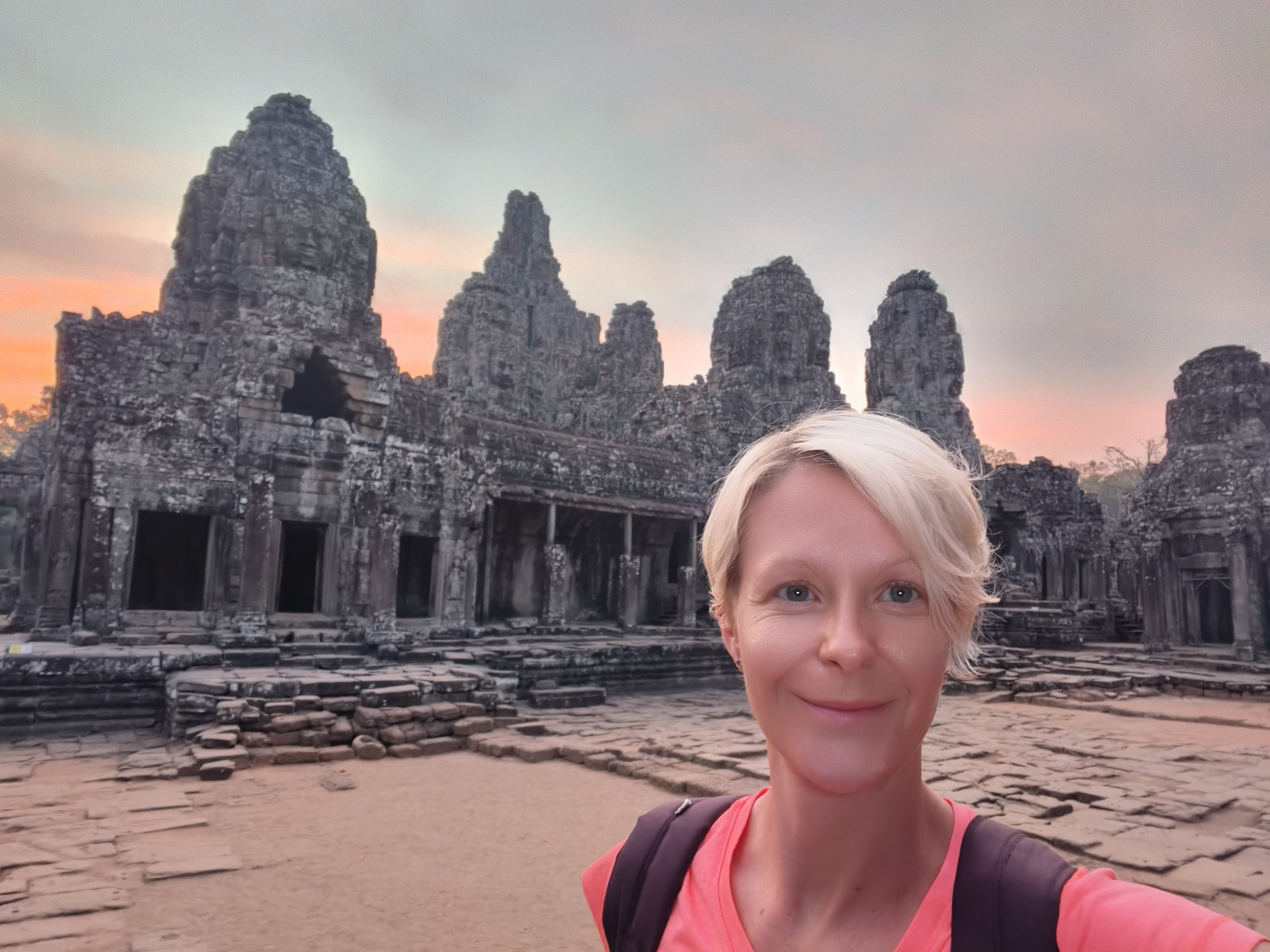
The wisdom of the Angkor Wat Temple
In February 2025, I visited the Angkor Wat Temples in Cambodia.
One of the reasons I traveled through Southeast Asia for three months in 2025 was to visit Angkor Wat – the biggest religious temple complex in the world.
Imagine walking through a forest and suddenly finding hundreds of Buddhist and Hindu stone temples, widely overgrown by trees.
Monkeys running through the ruins, buffaloes in the rivers between the temples, which are precisely decorated, carved into stone walls, and built from heavy bricks laid so perfectly on top of each other that even today’s technology cannot fully explain how they were constructed.
My sister gave me a private tour with a local guide as a present, which was excellent.
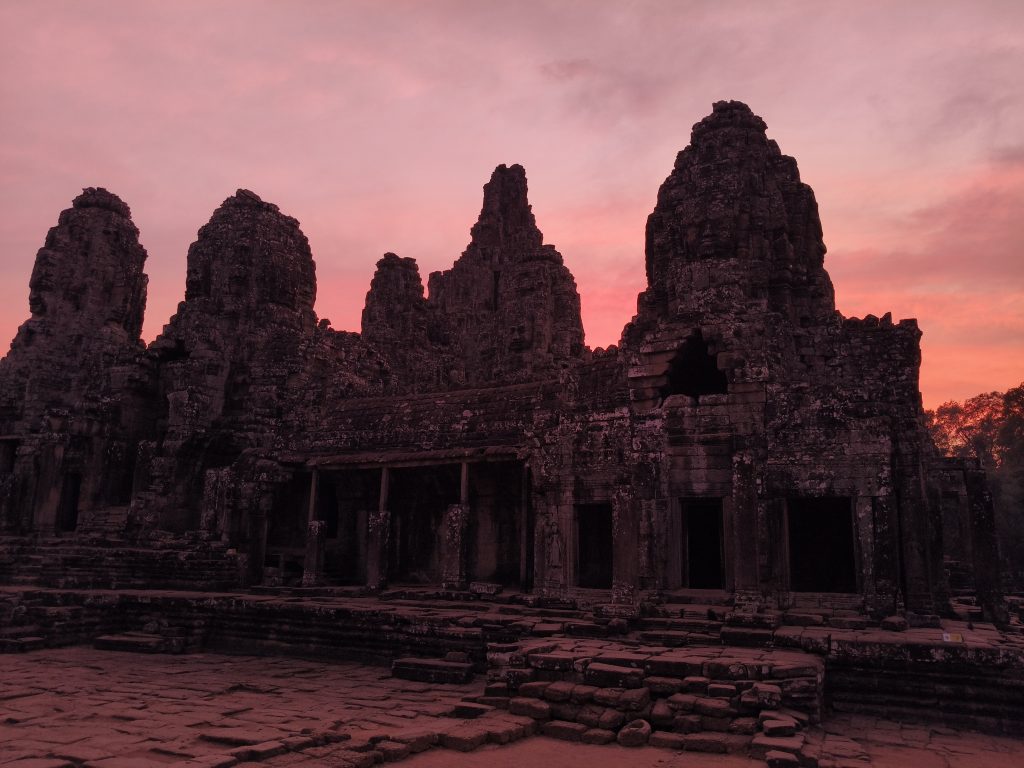
One evening, I went again to “talk” to the stone faces of the Bayon Temple.
A girl I got to know in my homestay in Hoi An (Vietnam) recommended that I ask them important questions during sunset.
How I got there
I went from Siem Reap by tuk-tuk at 17:00 and had read that in the evening the entrance is free (during the day it costs about 37 USD for one day).
The driver pretended not to know about it, and at the entrance they also tried to sell me a ticket because I arrived around 16:45.
I told them I wanted to wait until 17:00 because then it is free, and they finally let me in without a ticket.
I went to the Bayon Temple, and there were only two other people and some monkeys while the sun was setting and the sky turned pink.
Some of the answers from the faces
(I cannot tell all of them – too private):
💬 Don’t worry, just continue. You will always find a solution.
💬 In calmness lies power – be positive, smile.
💬 Record a hypnosis for yourself.
💬 It is okay if something goes wrong.
💬 You have a lot of amazing people in your life who support you.
💬 This is the biggest challenge in your life.
💬 You will grow.
💬 And after this, you will know exactly what you want.
💬 You will see miracles.
☯️ Live according to Tao and Buddha
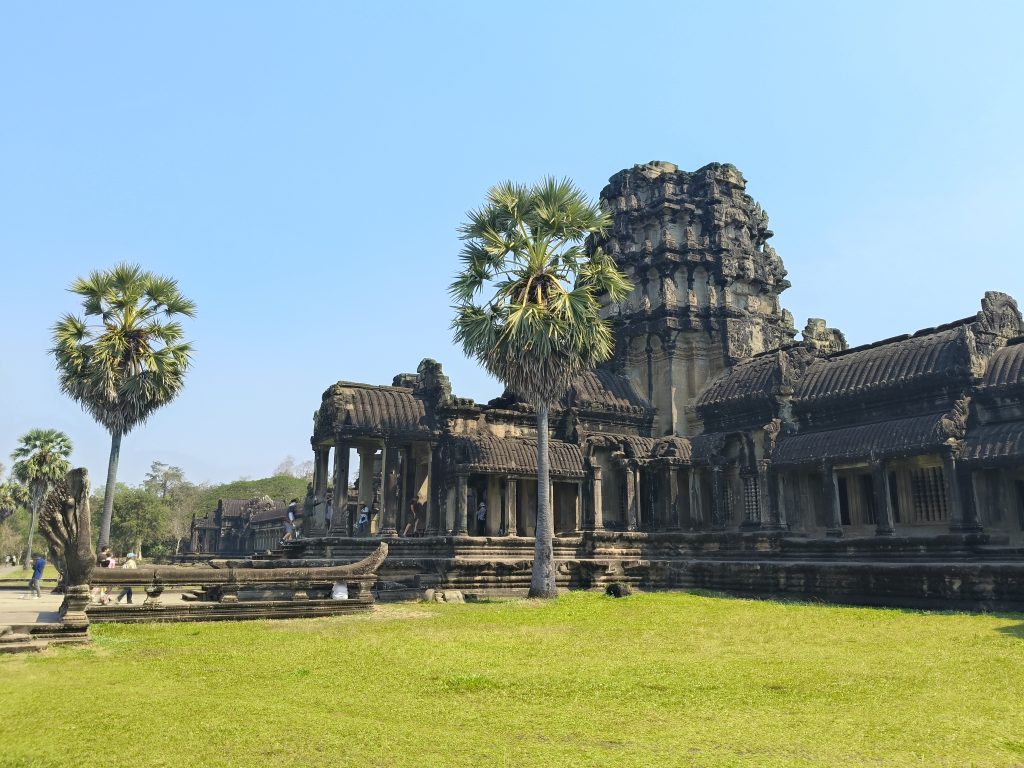
Some facts about Angkor Wat
It was built by King Suryavarman II in the early 12th century, and there are more than 1,000 temples and structures spread over about 400 square kilometers
By 1431 CE, after attacks by the Siamese (Ayutthaya Kingdom) and long dry seasons, Angkor was largely abandoned as a capital and left to nature.
In 1860, a French explorer “rediscovered” it while walking through the forest – imagine what a surprise that must have been.
Angkor was never truly lost to local people, but it became widely known in the Western world only after Henri Mouhot wrote about it.
More pictures on my instagram Channel